
Lantern Clock
Circa 1715
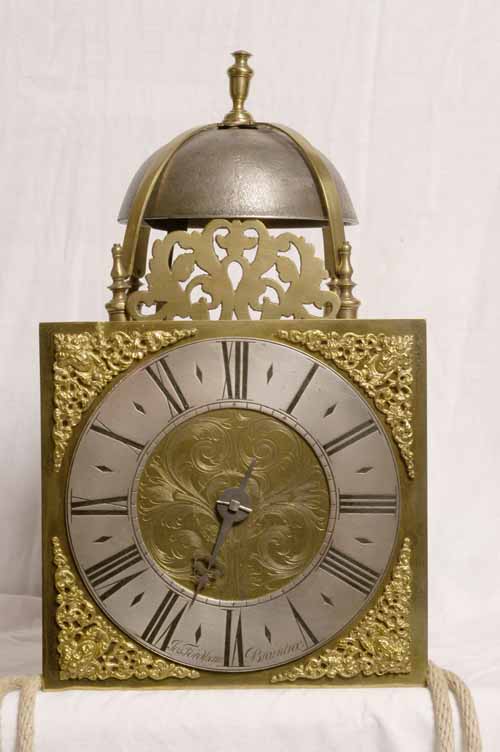
This object is a brilliant example of a thirty-hour English lantern clock dating from the early 1700s. The clock was made by Joseph Fordham of Braintree.
The first English lantern clocks originate from early Northern European iron clocks and are thought to have first been made in London by Huguenot craftsmen. Shaped typically like lanterns to be placed on the wall, they were the first type of clocks widely used in wealthier homes in the early 1600s. These clocks transformed how people lived by bringing timekeeping indoors. They were also status symbols placed in main halls or stairwells in large houses.
These clocks were elegantly made, with four pillars enclosing the movement, which was weight driven, with generally two weights hung from ropes or chains at the bottom, gravity ensuring the working of the mechanism. Without a pendulum, their accuracy was not perfect, and there was no second’s hand. The weights needed to be pulled on a daily basis to keep the clock working. Most clocks were fitted with a bell, striking on the hour, set into the top of the clock.
The popularity for these clocks declined in the early 1800s when advances in technology produced more accurate timekeepers.
The Fordhams were a prominent family of clockmakers based in Essex. They had workshops in Dunmow, Braintree, Bocking and Coggeshall. Joseph Fordham was working in both Braintree and Bocking from the early 1700s. His workshop produced both early-type wall lantern clocks and substantial longcase clocks housed in local Essex oak.


