Coffee Grinders
The earliest coffee grinding tools were very simple yet effective: mortars and pestles. By the 1400s, with the rise of coffeehouses, the first coffee grinders were invented in the Ottoman Empire.
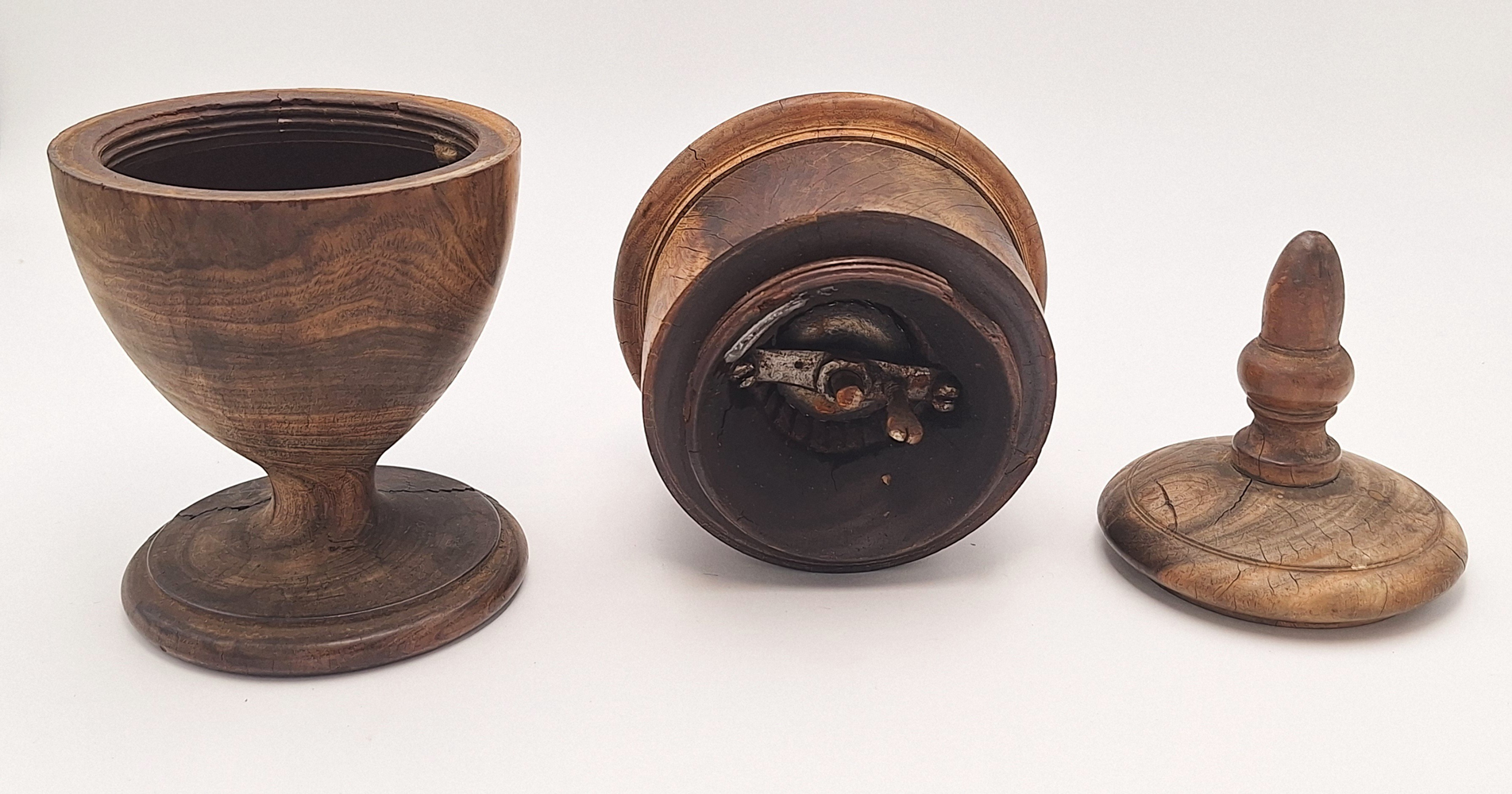
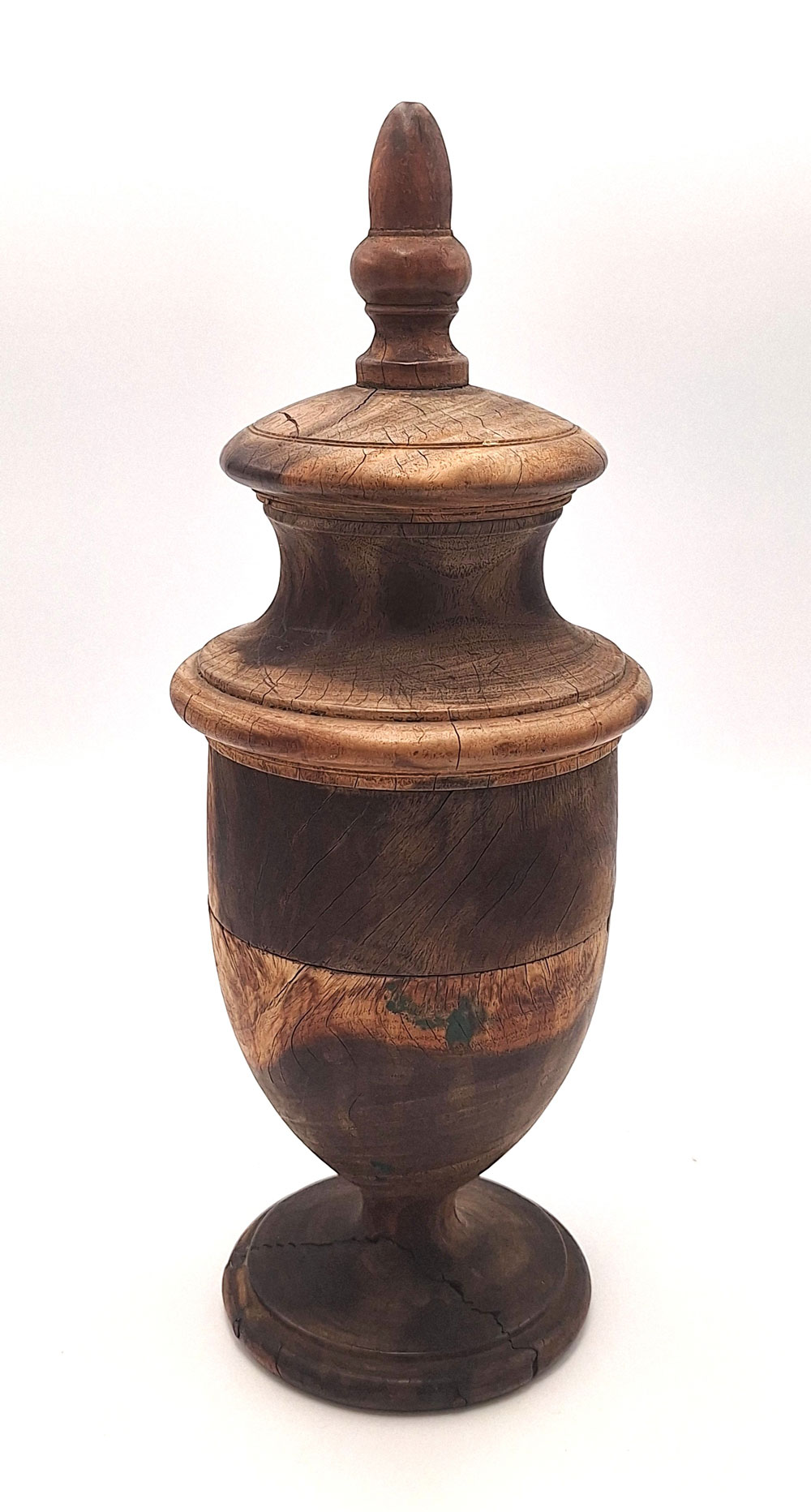
By the 1750s coffee had become a popular drink worldwide. Although merchants often provided ground beans, it became fashionable amongst the wealthy to have the beans ground at home. Simply designed, these hand-cranked grinders were often made entirely of wood. The urn-shaped wooden grinder on display dates from the late-1700s. Within the structure there are metal burrs that would have been turned by hand to ground the coffee to drop into the bottom compartment.
The Industrial Revolution in the 1800s brought mechanisation to coffee grinding. Factories producing coffee grinders thrived in Europe and the United States. Subsequently, coffee grinders shifted from a luxury to a common household item.
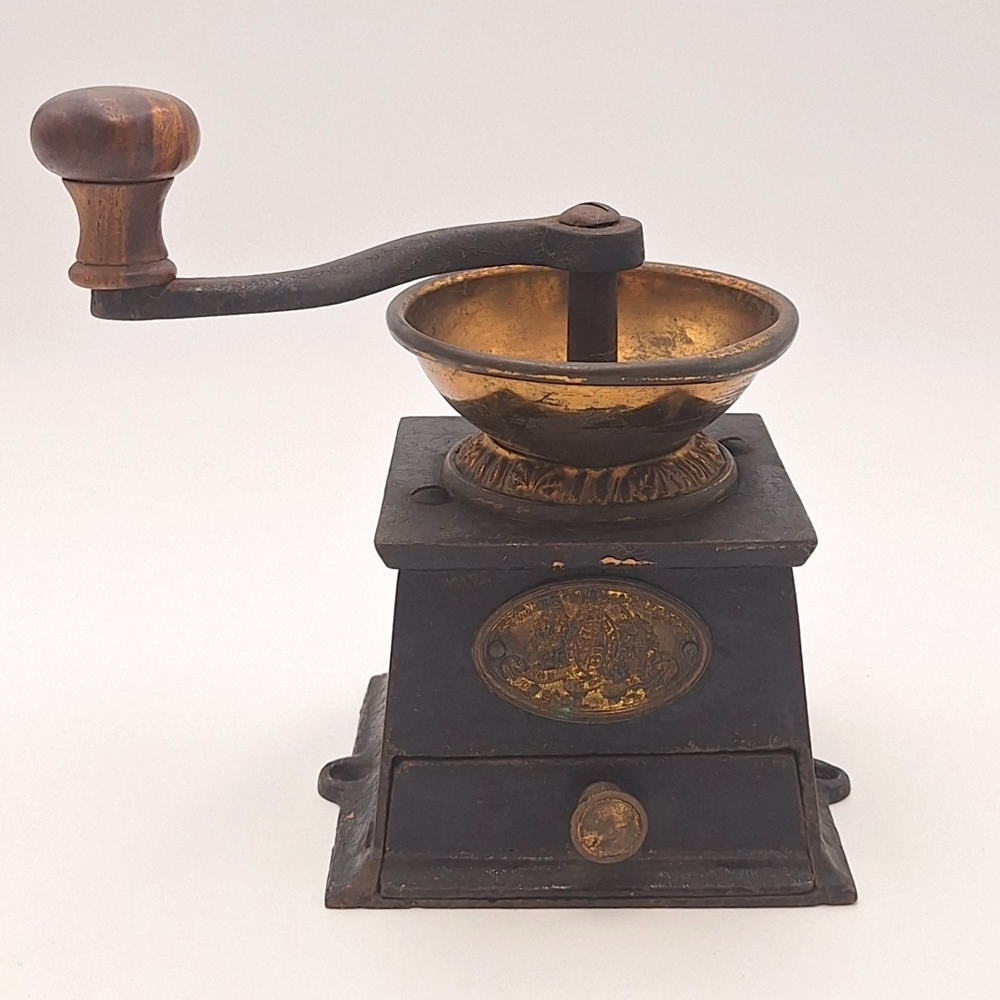
The second coffee grinder, named the ‘Improved Coffee Mill’, dates from the 1860s and was made by the company T & C Clark & Co, a large industrial and domestic iron foundry from Wolverhampton. The grinder was designed to sit on a worktop or to be bolted to table or wall and features a small pull-out drawer to catch the ground coffee. The Royal Coat of Arms on the front of the grinder was commonly used in Victorian manufacturer labels and stampings as a symbol of high quality and royal warrant association.