
A Pair of Brown Boots, circa. 1830-1860.
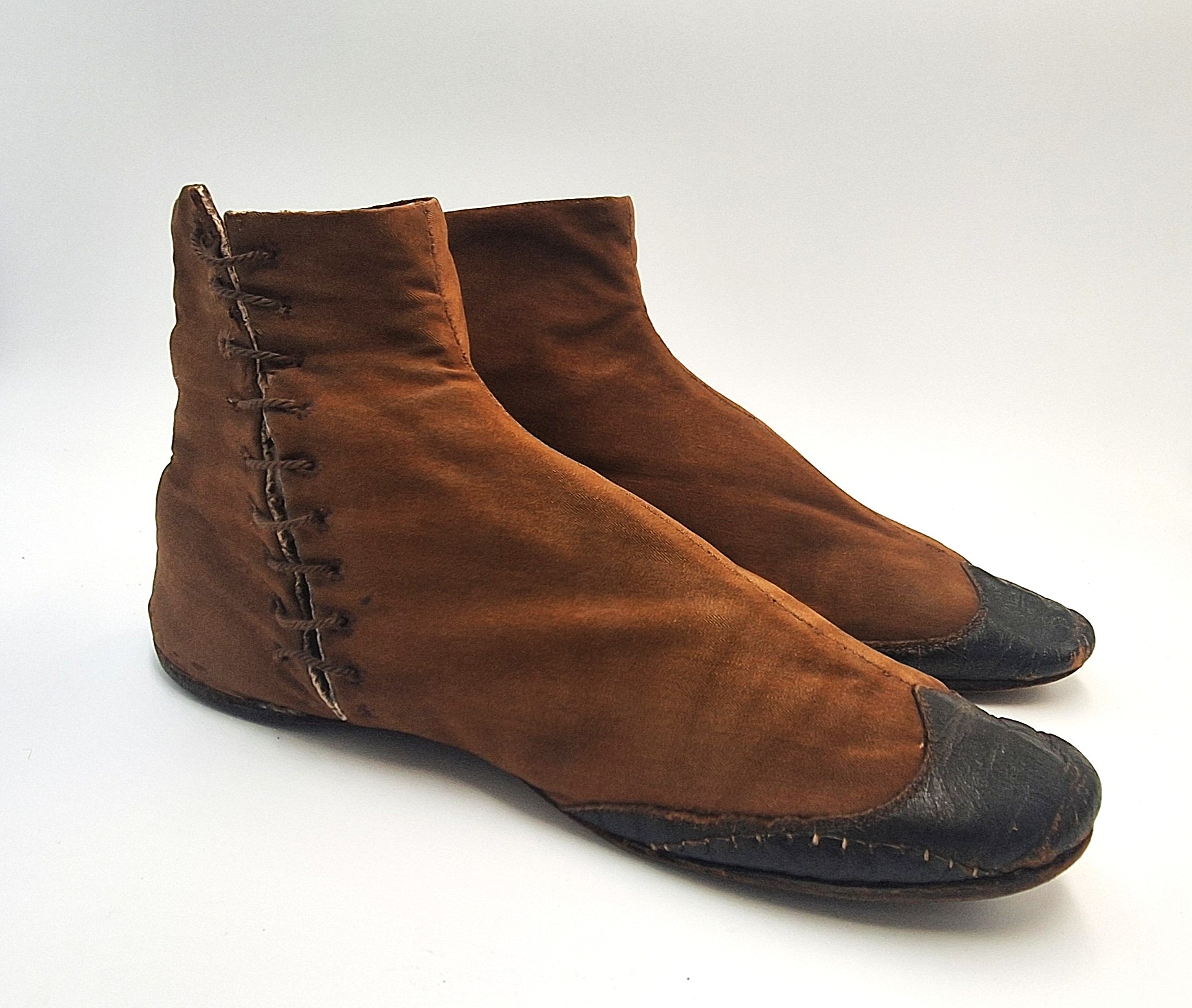
Here are a pair of women’s side-laced brown fabric boots. The protective layer of leather on the toes, known as foxing, was added to the soft fabric to provide protection and durability for walking outside. Due to resembling men’s footwear covered with gaiters, these boots were often called ‘gaiter boots.’ Most shoes in this period were made by a local shoe cobbler on the high street.
These were popular and fashionable every-day shoes for women during the mid to late 1800s. They were often notably plain due to being worn under large, floor-length skirts that hid women’s feet. The boots were made of soft, pliable, textiles such as velvet or satin and had flat, extremely thin, leather soles. The thin soles would have made walking on some uneven surfaces very uncomfortable and impractical in certain weather conditions.
These boots also, often, had ‘straight soles’ meaning that they lacked a left or right definition and were usually very narrow. Straight soles were often uncomfortable but ultimately lowered the overall cost of shoe manufacturing due to the production of only one type of sole rather than a left sole and a right sole.
Boots, like these, would have been worn by women for daytime excursions, running errands, traveling or attending outdoor events.
It was only towards the end of the 1800s that flat, narrow, straight soled shoes began to be replaced by more flamboyant, substantial, often heeled, shoes and boots.


