
Trade Token, 1794
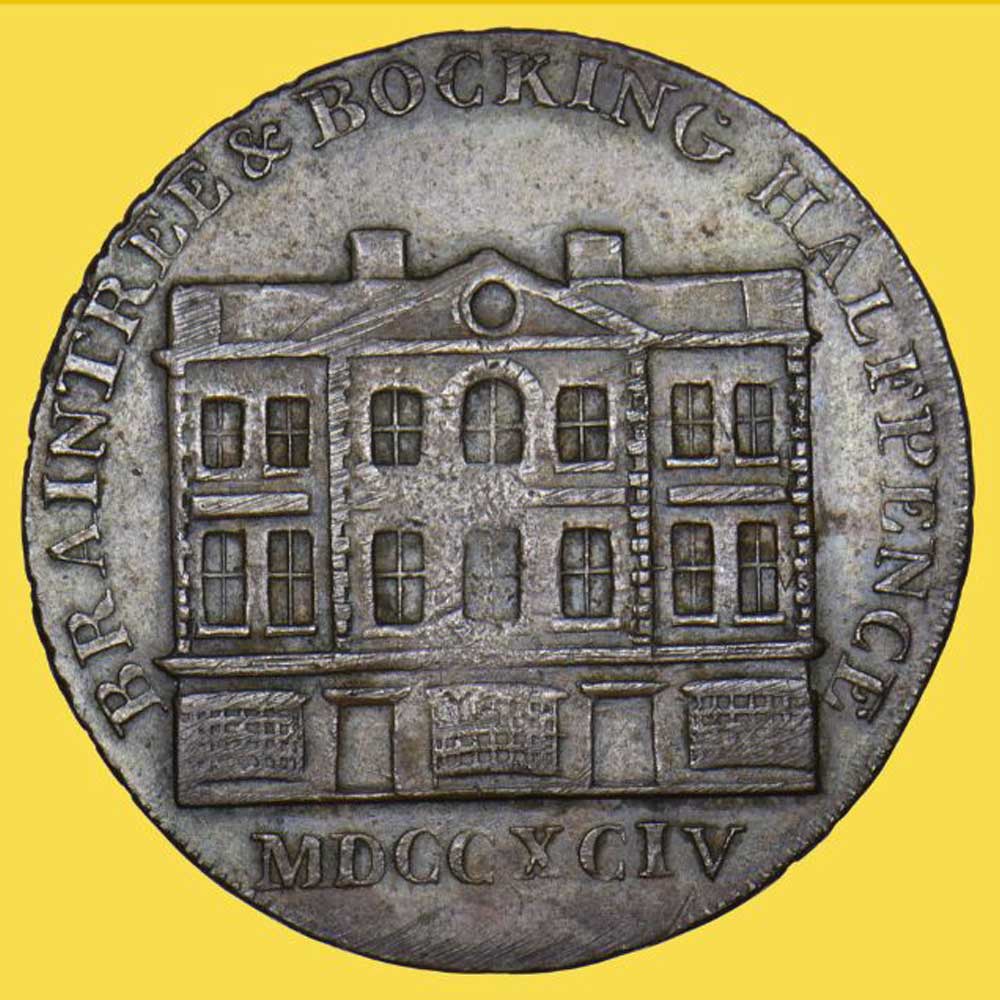
This Braintree and Bocking halfpence trade token dates from 1794. On one side it is inscribed ‘Success to Trade and Commerce’ with a depiction of the figure ‘Hope’ with an anchor. On the other side it shows a large Georgian building with the date. On the rim it reads ‘Payable to W. Goldsmiths.’
Trade tokens, also known as ‘condor’ tokens, were a form of private currency used by tradesmen during a period when there was a shortage of official coinage. From 1787 to 1797, small change in Great Britain consisted almost exclusively of these tokens. These privately produced token coins were made of lead, tin, brass or copper.
They served as a medium of exchange within the local community, with businesses like Goldsmiths issuing them to circulate. William Goldsmith was a draper and tailor in Braintree. Braintree and Bocking had become a major centre for the cloth trade with the Flemish weavers arriving to the area in the 1500s. By the 1700s the manufacture of cloth in Braintree and Bocking continued to grow and the combined output of the two places exceeded that of all other Essex towns except Colchester. Goldsmith, as a draper, would have sold the cloth made for clothing and other items.
The building on the token, mistakenly thought to be that of the Shire Hall, Chelmsford, is that of a 1400s timber-framed building that was completely altered and re-fronted with red brick in 1758. The building still stands today along Bank Street, Braintree, as the entrance to George Yard. Before it was altered it had shops on the ground floor and the Prudential Assurance Company were in the rooms above.


